
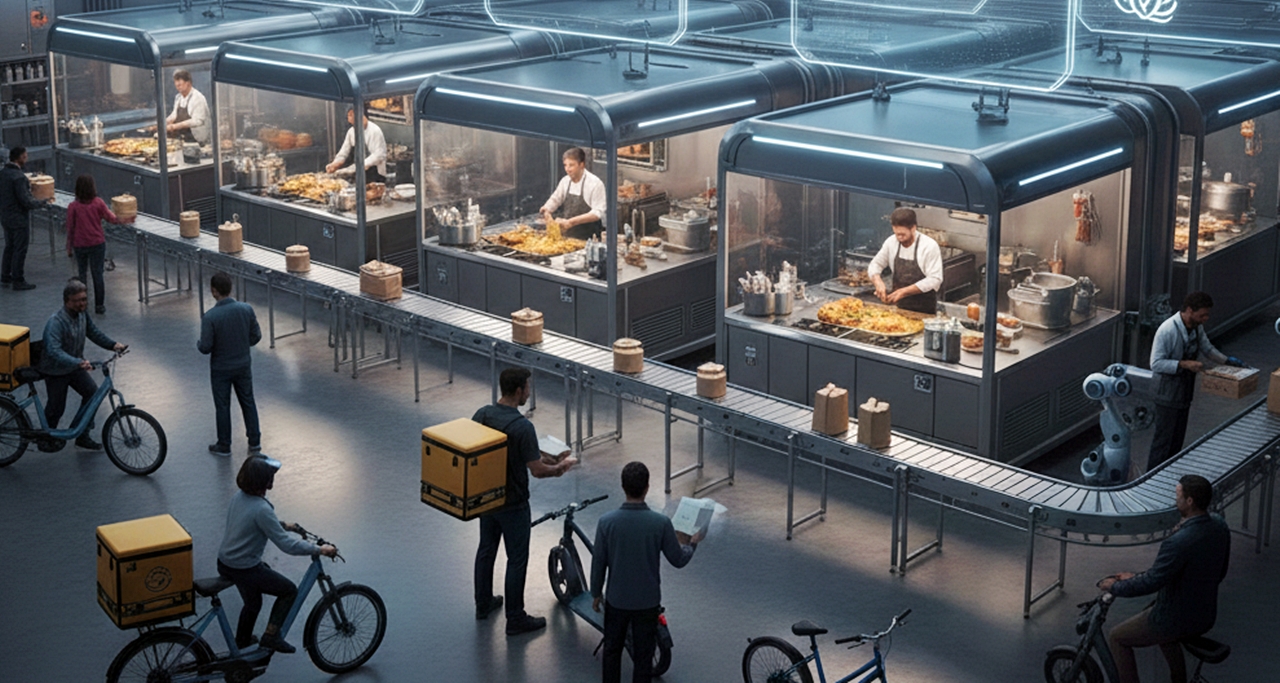
The way we dine is changing dramatically in an era when innovation and convenience overlap. The days of restaurants requiring lavish interiors or great space to be successful are long gone. Welcome to the world of cloud kitchens, an exciting development that is completely changing the food industry. These delivery-only restaurants, sometimes referred to as “ghost kitchens” or “virtual kitchens,” are using data, technology, and low overhead to satisfy consumer’s increasing need for high-quality, quick meals that can be ordered online.
In this blog we look at how the cloud kitchen revolution is changing food preparation, delivery, and consumption of food. From its early days and rapid growth to its key players and future prospects, we show why cloud kitchens are more than just a passing trend, they are the future of dining.
Cloud kitchens are delivery-only restaurants without a physical storefront or dining spaces for customers. They so work in the background while staying out of sight. Customers can place their orders directly from the cloud kitchens via their own app, website, or phone number, or they can use food delivery applications like Swiggy, Zomato, etc. Drivers pick up the food from production kitchens, where it is cooked before being delivered to customers. some cloud kitchens do provide the take away option for customers Without the expense of a dining room or front-of-house employees, the approach enables one or more virtual restaurants to run from a kitchen optimized for delivery and take away.
Consider these restaurants as food manufacturing factories, where food is manufactured and then shipped to the eventual consumer, by seeing cloud kitchens as factories rather than restaurants, the approach changes to one where the manufacturer of the food is focused on producing consistent, high-quality output at the lowest possible cost, without worrying about how or where the product is consumed by the customer. This eliminates the main limitation posed by the physical location .
CLOUD KITCHEN VS GHOST KITCHEN
Before we dive deep into it let’s get this sorted first. Although they are frequently used synonymously, “ghost kitchen” and “cloud kitchen” are not exactly the same, despite their close relationship. Any restaurant idea that operates from a commercial kitchen without a dine-in area and simply offers delivery services is referred to as a “cloud kitchen.” whereas a “ghost kitchen,” is nothing but a particular kind of cloud kitchen which frequently uses third-party delivery apps and concentrates on a single brand. Essentially, all ghost kitchens are cloud kitchens, but not all cloud kitchens are ghost kitchens.
POPULAR CLOUD KITCHEN COMPANIES.
Rebel Foods
Rebel Foods, The World’s largest cloud kitchen company is an Indian firm that runs 11 cloud kitchen brands, such as Oven Story, Behrouz Biryani, and Faasos. With over 450 locations across ten countries, it is the biggest chain of cloud kitchen restaurants worldwide. Operates in 75 locations in India, Indonesia, the UAE, the UK, Singapore, Malaysia, Thailand, Bangladesh, Hong Kong, and the Philippines, with more than 450 cloud kitchens. In addition to their own brands, Rebel Foods work with other food and beverage brands like Wendy’s, Natural Ice Cream, Slay Coffee, and Anand Sweets to handle its cloud kitchen facilities.

Kitopi [kitchen Utopia]
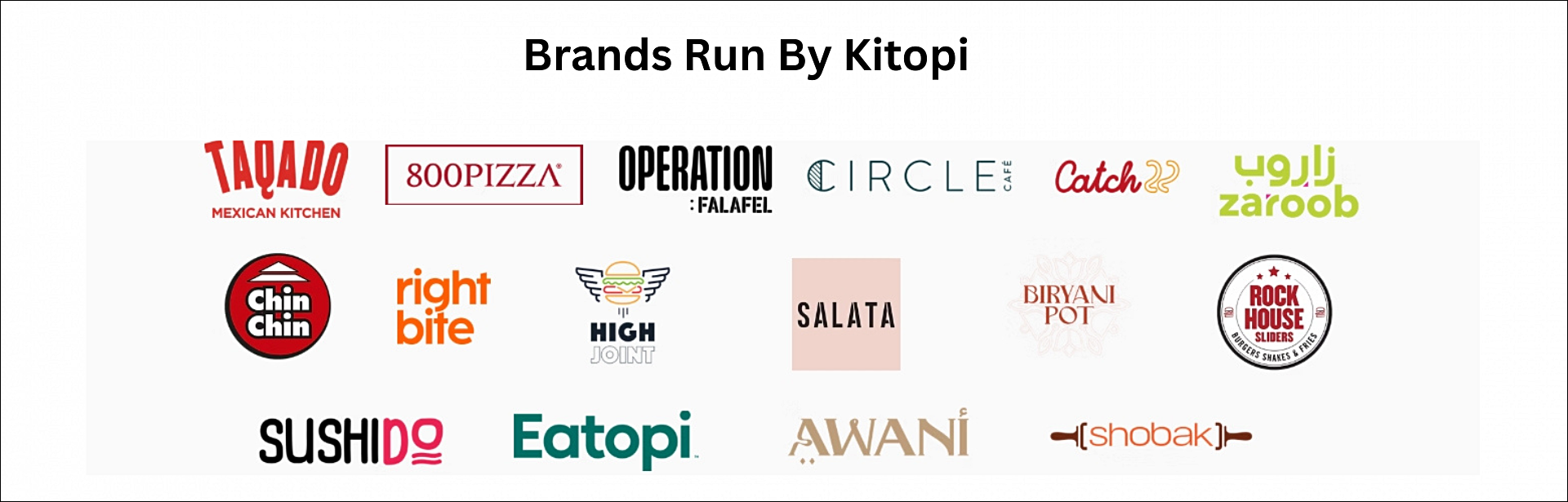
Kitopi [Kitchen Utopia] A managed cloud kitchen platform, meaning it operates multiple virtual restaurants from a single kitchen, Kitopi is the the largest managed cloud kitchen company in the Middle East was founded in 2018 in Dubai. It operates in the Middle east in countries like UAE, Bahrain, Kuwait, Saudi Arabia & Qatar. The have recently entered to Europe by starting the operation in Poland. Kitopi also partners with well-known food brands like McDonald’s and Pizza Express to reach a larger audience. By handling the operational facets, such as delivery and kitchen operations, Kitopi frees up brands to concentrate on their core business competencies.
Curefoods
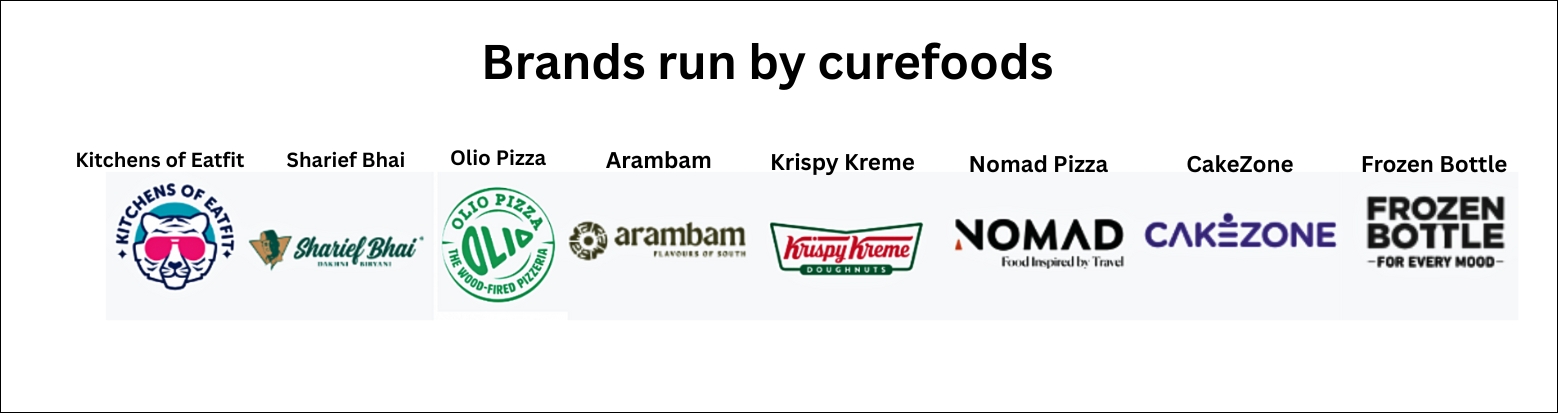
Curefoods (EatFit) is a prominent brand from India specializes in running cloud kitchens and developing food brands, usually using a direct-to-consumer (D2C) business strategy with over 10 brands and more than 340 locations across the country. Curefoods was founded in 2020.
EatClub Brands
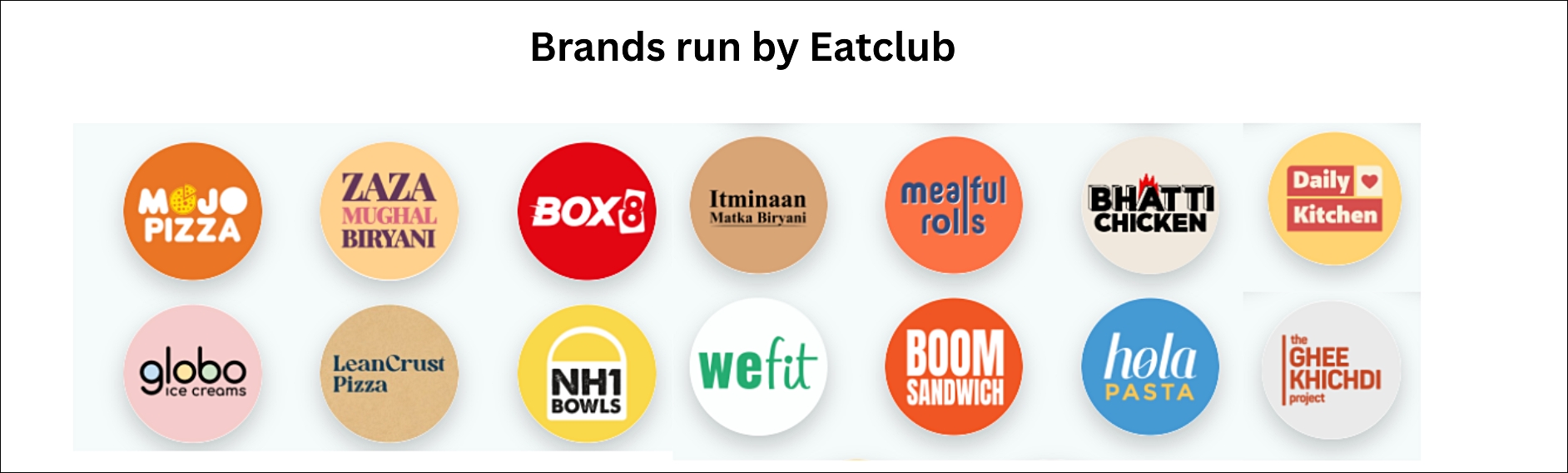
EatClub Brands, formerly known as Box8 is a full-stack cloud kitchen firm, meaning maintains control over the whole food value chain, from sourcing ingredients to preparing meals to last-mile delivery. Founded in 2012 the brand serves over 1 million meals monthly at over 300 outlets across 7 cities [Mumbai, Pune, Bangalore, and Delhi NCR, Hyderabad,Kolkata &Chennai] Initially Box8’s product line included mostly Desi Foods in handy boxes, which is how Box8 got its name.
MAJOR ADVANTAGES OF RUNNING A CLOUD KITCHEN
- Cost-effectiveness: Expenses like Rent, utilities, and equipment are decreased when kitchen resources are shared. Bulk ingredient purchases reduce food costs for all brands.
- Optimization of Resources: Utilizing the same kitchen staff, supplies, and space to accommodate several brands reduces downtime and maximizes resource efficiency
- Adaptability and Expandability: Cloud kitchens especially Multi-brand cloud kitchens may easily expand by adding new brands or breaking into new markets without the need for more physical locations, making it simple to test and launch new menu offerings.
- Market Reach: The market reach increases as the cuisine becomes broader. By serving a variety of cuisines in one location, The restaurants may draw in more customers and increase sales. The entire visibility of a brand is increased by cross-promotion.
- Reduced Risk: Running several brands lowers financial risk, makes it possible to explore new ideas, and lowers the likelihood of failure.
On the other hand Cloud kitchens offer several advantages for customers, primarily revolving around convenience and affordability. Customers benefit from access to a wider variety of cuisines and restaurants through online delivery platforms, often at lower prices.
MAJOR DISADVANTAGES OF RUNNING A CLOUD KITCHEN
- The complexity of Operations: It can be quite difficult to manage several brands from a single kitchen, particularly when things are busy. Maintaining consistency in quality across many menus and dishes necessitates careful coordination.
- Distribution of resources: It can put a strain on resources to share kitchen personnel equipment among brands, which could result in slower service and errors. It takes rigorous supervision to manage inventory for several brands in order to prevent waste and guarantee that everything is in stock.
- Brand Recognition: When multiple brands occupy the same area, their distinct identities may get muddled, which diminishes their allure. It can also be challenging and time-consuming to develop unique and persuasive marketing tactics for every brand.
- Customer Experience: A physical restaurant makes it easier to interact with customers on a personal level, which may influence their loyalty. relying on outsourced delivery services entails risks such as exorbitant costs and uneven service for customers
- Heavy reliance on technology: Because technology is heavily relied upon, any problems with the system could seriously impair operations.
from a customer’s point of view Cloud kitchens lack the face-to-face interaction that traditional restaurants offer. This can make it harder to build a personal connection with the brand and address issues directly and the quality of the dining experience is dependent on delivery.
Finally, what the future holds for Cloud kitchens???
With anticipated growth driven by rising demand for online food delivery, cost-effectiveness, and technical advancements, cloud kitchens have a bright future. With their increased flexibility, scalability, and creative approaches to food preparation, cloud kitchens are predicted to completely transform the restaurant business across regions. According to studies, the cloud kitchen market is expected to develop at a compound annual growth rate (CAGR) of 12.0% from 2021 to 2027, reaching $71.4 billion by that time. The Cloud Kitchen market in India grew from $400 million in 2019 to $1.3 billion by 2024.
This growth is caused by a number of matters such as
- Increased Online Food Delivery: Cloud kitchens have become an important factor in the growing popularity of online meal delivery services.
- Shifting Consumer Preferences: Online food ordering is becoming more popular among younger populations with more optional means, especially due to its ease and quicker delivery.
- Covid 19-Related Change: Because of lockdowns and social distancing measures, several restaurants adopted delivery models during the COVID-19 pandemic, which spurred the expansion of cloud kitchens.
- Reduced Initial Expenses: Cloud kitchens require less initial investment compared to traditional restaurants, making it an attractive option for entrepreneurs.
Conclusion