

In recent years, plant-based and vegan eating has become a global trend that is changing the way we think of food, going far beyond merely a niche lifestyle choice. upscale restaurants and fast-food franchises alike have begun to offer plant-based menus. It started as an animal-compassion-based philosophy and has now grown into a larger discourse on sustainability, health, and the planet’s future With this blog we are going to dive into the emergence of vegan and plant based diets, the reasons why they have become so popular these days and the role they play in changing our cuisines, kitchen and to an extent our culture.
The global shift in eating habits
Urbanization, changing lifestyles, and easier access to processed and fast food are the main causes of the global shift in diet habits, which is defined by a trend toward diets richer in processed foods, sugar, fat, and salt and a drop in the consumption of fruits, vegetables, and fiber. Often referred to as the “nutrition transition,” this change in diet causes an increase in obesity and chronic illnesses. simultaneously the world is experiencing the trend of people influenced by the importance of safe and healthy dining steadily showing interest for the vegan and plant based foods ditching the popular processed foods, other snacks and sweets.
Why there is a growing interest in plant-based diets?
Not just the younger generation people across age groups have shown their liking towards plant based dining alternatives across the globe, consumption of fresh fruits and vegetables, legumes, whole grains, nuts, and seeds, sprouts and minimal to nil animal based food products. This is also to an extent due to the belief and several studies suggesting these food options can not only significantly reduce the risk of diseases such as diabetes, obesity, heart diseases and some types of cancers but also can boost your cognitive abilities and overall health.
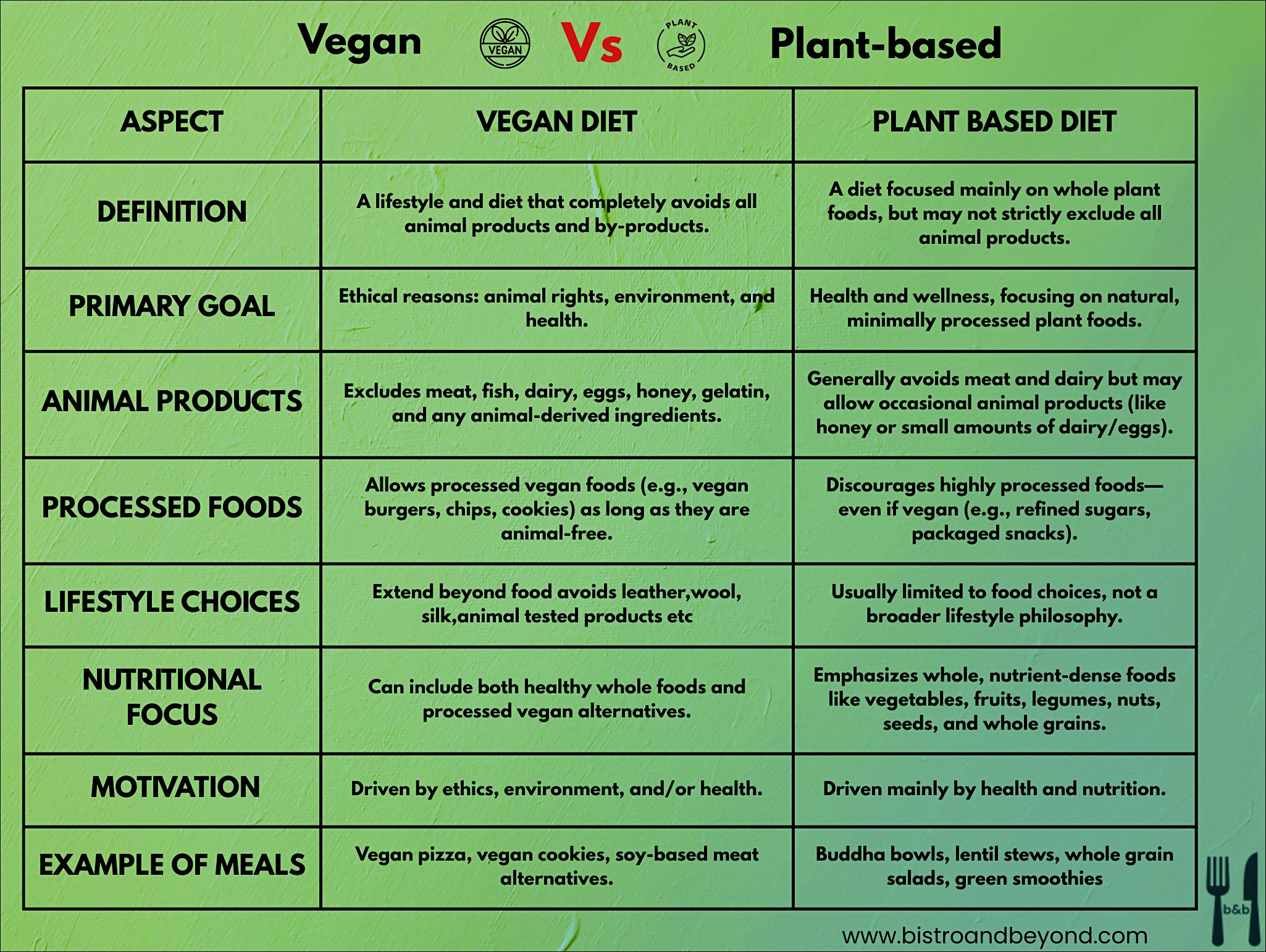
What’s the Difference Between Plant-Based and Vegan Diet?
Cullinary creativity and innovation
Culinary creativity and innovation in plant-based and vegan diets is majorly driven by the use of plant-based products, such as soy, peas, almonds, and mushrooms, to replicate the texture and flavors of meat, dairy, and eggs. Chefs and food technologists are using techniques like fermentation to produce new flavors and textures, while foods like jackfruit provide versatile, cost-effective alternatives. Innovation seeks to create meals that are as flavorful and consistent as those derived from animals, in addition to creating meals that are nutritionally balanced. Increased accessibility and customer interest in wholesome, sustainable diets support these initiatives.
The rise of plant based substitutes!!!
The emergence of meat alternatives that appear, look, and even taste like real meat is one of the most intriguing features of the plant-based trend. The days of vegetarianism being restricted to simple lentil cutlets or soy patties are long gone. Today, companiess like Impossible Foods and Beyond Meat are spearheading a culinary revolution by producing plant-based goods that even die-hard meat eaters will enjoy.
what makes them unique?
- Unlike our typical veg burgers, these alternatives have been created to taste, feel, and smell like actual meat.
- A key plyer in this space Impossible Foods uses heme, a plant-based ingredient, to give their burgers a “meaty” flavor and even the ability to even “bleed.”
- Another popular brand, Beyond Meat combines pea protein, beet juice extract, and coconut oil to mimic the texture and juiciness of beef. That’s like innovation at its best, right fellas?
why have they become popular?
Sustainability: Producing these substitutes uses a lot less energy, water, and land than raising livestock.
Health: Since they don’t contain animal hormones and have reduced cholesterol, many consumers consider them to be a healthier option.
Accesibility : They are now slowly become available not only at supermarkets but also at well-known fast-food restaurants like KFC, McDonald’s (in some regions), Burger King, Also in Starbucks.
These days Innovation in plant-based products has expanded well beyond burgers. Meatballs, sausages, chicken nuggets, and even seafood substitutes are now available. Giving customers the entire meat experience without the associated ethical and environmental costs is the obvious objective.
Challenges to overcome
Despite the fact that these alternatives are becoming more popular, some critics point out that they are not always healthier than plant-based diets that consist of entire foods. Plant-based meats can be more costly than conventional meat, which presents another challenge. But as demand increases and technology advances, costs should decrease.
“While Impossible Foods is doing reasonably well thanks to growth in retail and wider market opportunities, Beyond Meat is having serious financial problems and declining demand, which could result in layoffs and bankruptcy contemplation. With overall retail sales down in 2024, this disparity is indicative of a larger decline in the market for plant-based meat“
For more updates on this issue, We suggest you to watch the detailed coverage in the YouTube video by CNBC
Cultural barriers in meat-heavy societies for vegan and plant-based food
Cultural barriers to plant-based and vegan diets in meat heavy societies include the belief that meat is more flavorful and enjoyable than bland plant-based substitutes; social pressure and the inconvenience of breaking family traditions; ignorance of how to prepare plant-based foods or what to eat for a balanced diet; and concerns about nutritional deficiencies, especially protein.
In contrast to primarily meat-consuming cultures, the advantages of vegan and plant-based diets are to an extent amplified in societies like India, which already have strong cultural ties to vegetarianism. This is due to the infrastructure, dietary practices, and cultural acceptance of these foods, which improves food security, improves health outcomes, and makes them easier to incorporate into daily life. These areas’ well-established plant-forward food systems lower the obstacles to switching to a plant-based diet.
Future of Veganism and Plant based Diet
Veganism and plant-based diets are expected to grow significantly in the future due to rising public awareness of the related health benefits, environmental issues, and ethical considerations for animal welfare. This demand will drive innovation in the plant-based food industry and push for legislative changes to support wider adoption of a healthier and more sustainable food system. While the benefits of full plant-based foods are obvious, research is still being done to develop plant-based alternatives to animal products and to address potential obstacles such the need for clear regulations, cost, and nutritional completeness.