
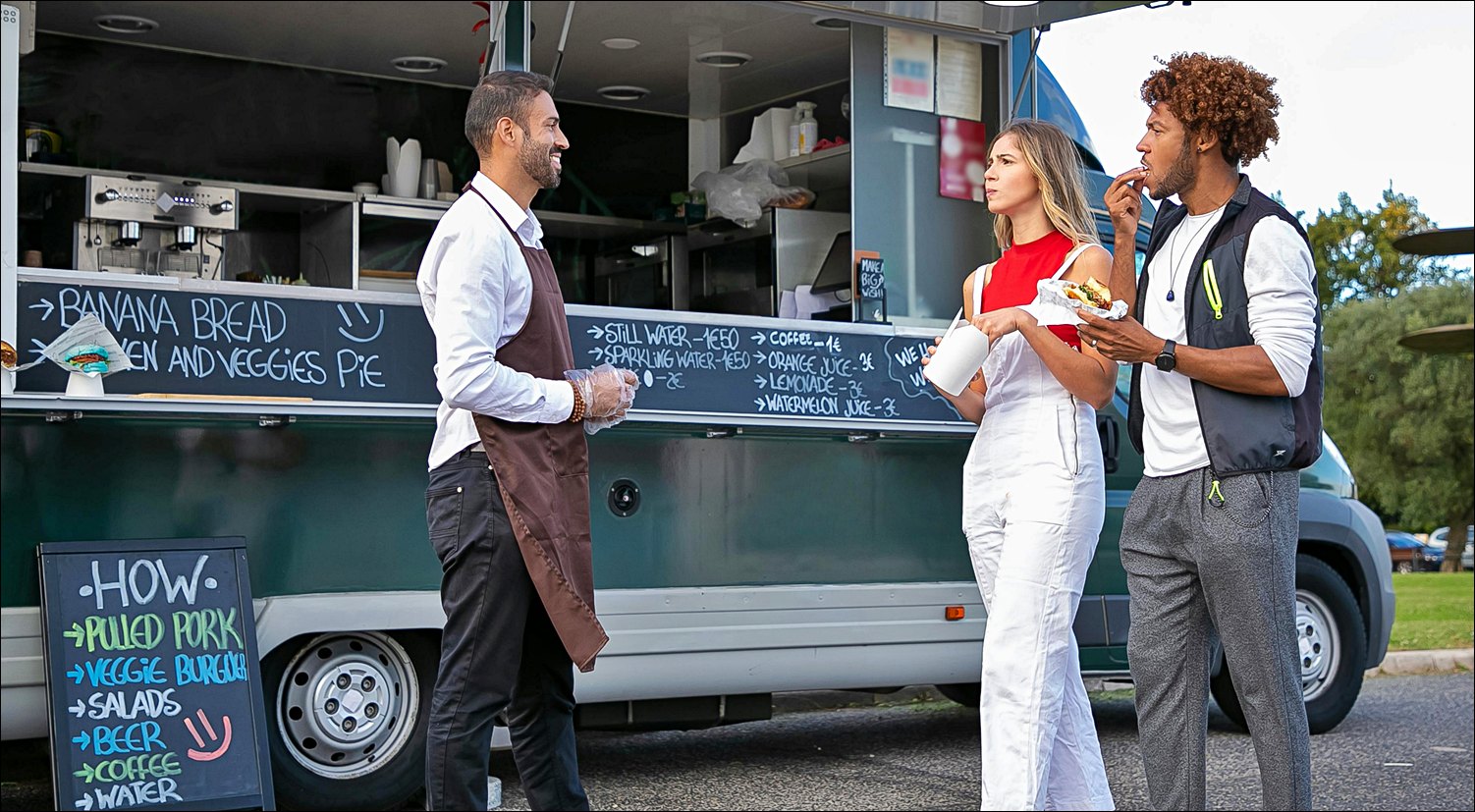
No, not just you, even we and many in the food community are huge fans of food trucks and relish exploring their menu. Originally considered as quick stops for snacks on the street, food trucks have developed into moving culinary powerhouses. With their creative menus, sizzling grills, and chefs who don’t mind breaking the rules, these rolling kitchens are revolutionizing the way and location of our meals. Gourmet burgers and international street cuisine are examples of how food trucks are embracing creativity, community, and culture on the go, going beyond simply convenience. To tell you about how the food trucks began their journey in to the community, It all began in the 19th-century with the lunch carts and horse-drawn chuckwagons were the historical forerunners of food trucks And by the early to mid-20th century, trucks and vans were introduced and employed as “roach coaches” that drove to construction sites and served mostly to blue-collar workers, as well as mobile canteens in the military. Economic and cultural changes in the food service sector brought about a significant increase in consumer appeal and the popularity of food truck driving as a full-time job in the twenty-first century. Despite having originated mainly in the United States, UK, and France, food trucks are now more widely present and more well-liked and accepted throughout mainland Europe, the Americas, Asia, and Oceania.
Whare food trucks so popular And what fuels their popularity?
Well, it’s not at all a secret that Food trucks are one of the latest and hottest innovations in the culinary industry. Street food vending is becoming more and more common in both urban centers and expanding cities. What’s interesting about these food trucks is the array of ethnic dishes they serve, from sandwiches, tacos, chats, and even biryanis. In the past ten years, food trucks have become increasingly popular. Various reports suggest that within the past ten years, the food truck industry has grown significantly. and is currently valued at over a billion dollars. Projections suggest that, by the end of the 2020s, food trucks with this growth rate will be an 8-9$ billion dollar industry.
Fusion Cuisine
Who would not want to try out a taco infused with the bold, smoky flavors of Korean barbecue or a pizza topped with spicy tandoori chicken? These innovative combinations represent the heart of fusion cuisine. A dynamic culinary movement that brings together flavors and techniques from around the globe. Our palates are more bold and adventurous than ever in the interconnected world of today. We have come across fascinating flavor profiles from Asia, Africa, the Middle East, and other regions thanks to travelers, social media, and a growing interest in various cultures. Fusion food has consequently come to represent creativity, respect for culture, and the limitless potential of flavor. We’re seeing increasingly distinctive fusion food meal ideas as the food truck business keeps growing. With cuisines from various regions coming together, showcasing unique taste profiles and culinary techniques, inspiring creativity and innovation.
Accessibility and Affordability over Traditional Restaurants
SocialMedia PresenceAnd Popularity among young people.
In this day and age, no business can survive without a solid presence in social media, and the case is no different for Trucks as they operate by travelling to various locations with a likelihood of sales, and for them, it is very important to maintain a constant Social Media presence. With a major chunk of the revenue coming from the young people who are considered Social media-friendly, likely to be more updated with Social media platforms, Food trucks leverage various Social media platforms to announce the locations they will be present, the timings, the menu, and of course, the offers…..Thus, in recent years, Social media platforms have become an effective resource for food trucks to engage with their customer base and ensure improved business. Additionally, Food Trucks are also making good use of social media and its influence among people to build a loyal customer community and attract new customers.
Sustainability & Future of Food Trucks!!!
The Sustainability Factor
As we focus on sustainability, the whole world benefits and can live in cleaner and healthier conditions. It is our responsibility to ensure a safer and beautiful planet Earth for the coming generations, right?
As a significant player in the food industry, food trucks have their fair share of sustainability practices, which they must follow religiously to ensure quality of life for everyone in the community and address alarming issues like pollution and waste management.
Ways in which Food Trucks have become More Eco-Friendly
- Reduce packaging waste- An easy yet efficient method food trucks practise to lower the environmental impact is minimizing their packaging waste. They implement sustainable practices and lessen the quantity of garbage that ends up in landfills by using packaging that is recyclable or compostable.
- Reduce Food waste- Trying to accurately forecast food orders, ensuring the right portions, and handling and storing food in a way that minimizes spoilage are some ways to do this. Additionally, reducing food waste also reduces the environmental impact, and from a business point of view, reducing food waste will have a positive impact on food cost and ensure a better profit margin.
- Use of energy-efficient equipment – Another way food trucks reduce their environmental impact is by investing in energy-efficient equipment. Equipment that consumes less energy and emits less greenhouse gases, like ovens, grills, and refrigerators.
- Utilize Sustainable Energy Sources- Food trucks in the initial days typically used petrol or diesel-powered engines to run their generators. which, as we all know, isn’t helping the planet in any way, but going for sustainable alternatives like solar and electrically powered batteries. they have made a significant impact in reducing carbon emissions.
Brighter future with Tech in Food trucks
Food trucks in general, or a significant majority, especially in the developing regions of the globe, avail reduced tech in their operations. Incorporating tech can positively impact the operations, ensure business growth, and better returns for food trucks. tech-enabled features like dedicated apps and platforms can significantly improve the revenue and operations for the business owners by ensuring effective route planning and improved customer connect through notifications and feedback, and improve the chances of catering to a wider audience through events and promotions. And for customers, these tools are wildly helpful to place online orders, make mobile payments, track location through GPS, and customize orders in advance to avoid complications later