Folks, In the vast, fast-paced world of Food & Beverage, few dishes command as much universal respect and appeal as pizza. This Italian dish is widely regarded as a culinary marvel, has transitioned from the streets of 18th-century Naples to become a multi-billion-dollar global industry. As food enthusiasts we see pizza not just as a meal, but as a masterclass in operational efficiency and cultural adaptation winning pallets all over the world. This blog is a deep dive into the origin, history, types, preparation, global popularity, and the major brands that have shaped the industry as we know it today.
The Origin & History: A Royal Endorsement
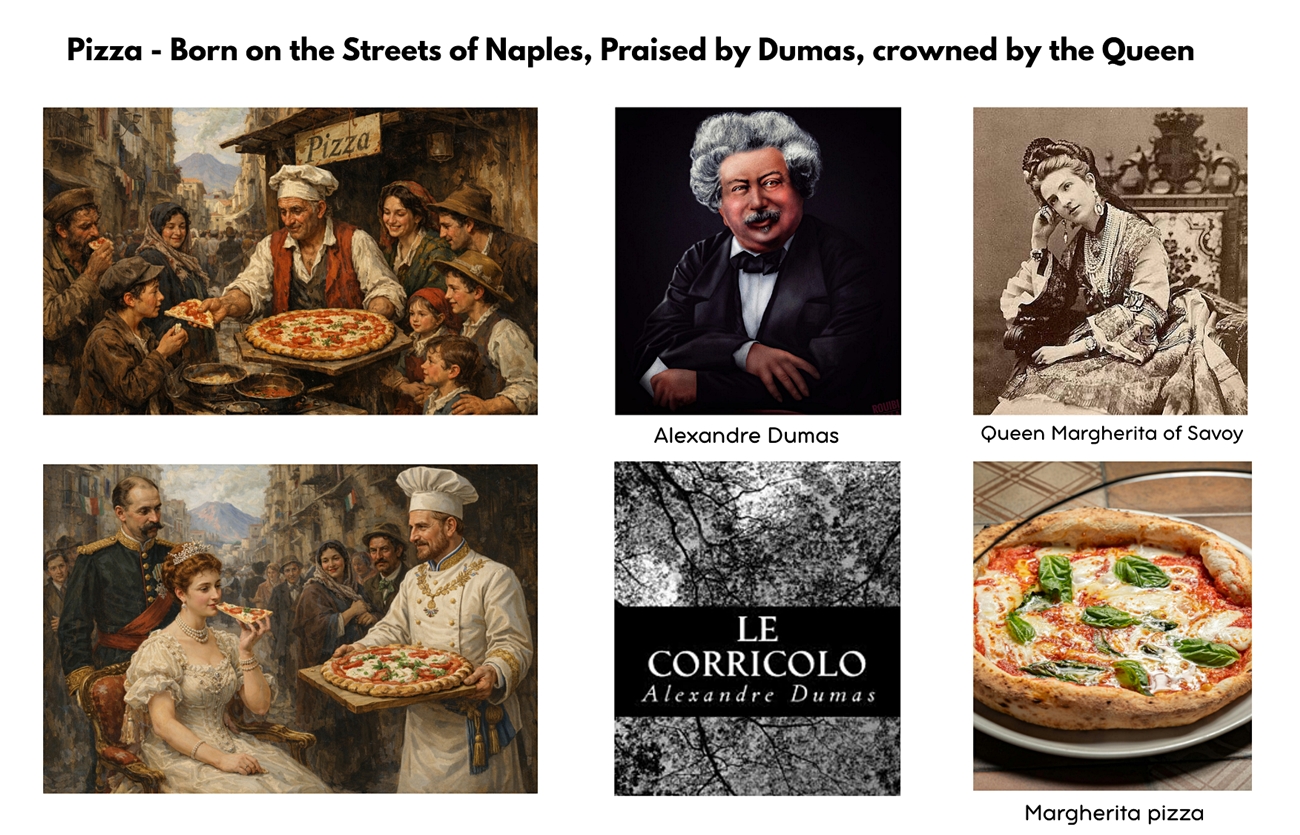
The story of pizza The world’s most popular fast food has some solid ancient roots and just does not begin with a box and a bike and someone to deliver it; it begins with the “Lazzaroni”—the working class or the poor of Naples. In the 1700s under the rule of Bourbon kings Naples was one of the biggest cities in Europe with a strong foreign trade, it saw a wide influx of labourers from the Italian country side and Naple’s population rose from 200,000 in 1700 to 399,000 in 1748. Because of this sudden rise in population significant majority of city’s working class fell into poverty as the urban economy struggled to keep up. The Major Victims of this were “Lazzaroni” who got the name because of the resemblance to Lazarus of Bethany [a biblical figure of the New Testament whose life is restored by Jesus four days after his death] the community struggled to thrive with the peanuts they earned from working as casual laborers,porters they were looking for inexpensive food that could be consumed quickly as they were on the go looking for jobs. Pizza met this need. back in the day pizzas were sold by street vendors with large boxes under their arms rather than in shops, and they would be cut to meet the customer’s appetite and of course budget. Alexandre Dumas a popular French novelist and playwriter In his 1843 travelogue “Le Corricolo” wrote about the extreme affordability and acceptance of Pizza in Naples as a single slice of pizza which was the breakfast of the working class costed only a liard[French coin] and 2 sous [4 liards] can feed the entire family. The turning point for Pizza took place in In 1889, when the Queen Margherita of Savoy visited Naples, The royal visit elevated the dish from a street-level food adorned by the poor to a national treasure. The queen was Seeking a change from the traditional French gourmet cuisine and she requested local delicacies from Raffaele Esposito of Pizzeria Brandi a local chef from Naples. Of the three pies created, the Queen was in awe of the one topped with tomatoes, mozzarella, and basil leaves, in some ways reflecting the red, white, and green of the Italian flag. This, “Pizza Margherita”, honored by the Queen, revolutionized the reputation of the dish.
Regional Types: Understanding the varieties of pizza
The Neapolitan style
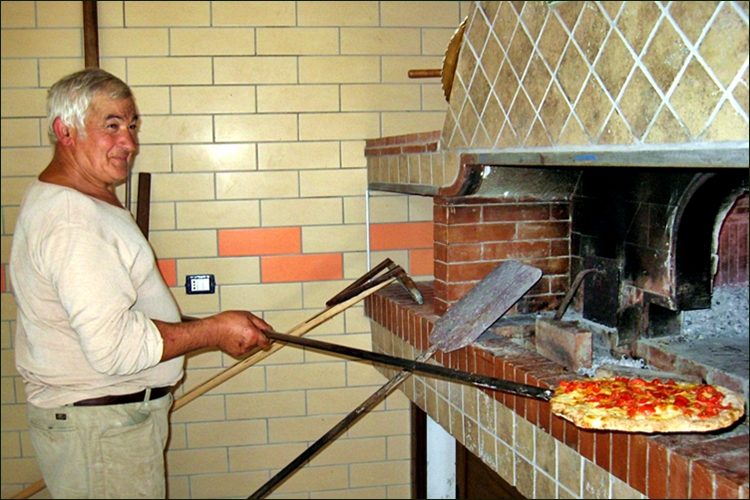
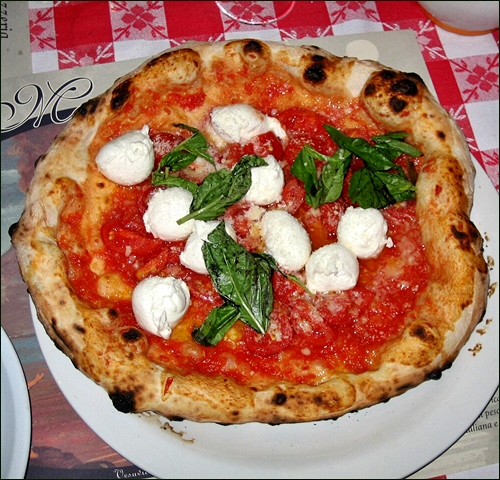
The Neapolitan style of Pizza making is widely considered the soul of pizza making in the culinary world, The style is governed by strict regulations set by the Associazione Verace Pizza Napoletana (VPN). It maintains that a true Neapolitan pizza must be hand-kneaded and topped with San Marzano tomatoes and Mozzarella di Bufala [Buffalo mozzarella is a mozzarella cheese made from the milk of the Italian Mediterranean buffalo]. The preparation demands a high-hydration dough baked in a wood-fired stone oven at temperatures above 900°F (480°C) for 60 to 90 seconds. This intense heat results in a soft and elastic crust with characteristic “leopard spotting” charring) and a fragrant, airy rim known as the cornicione. The Neapolitan style of Pizza represents the peak of artisanal quality, setting a global benchmark for flavour profiles and ingredient standards and is adored by pizza lovers across the globe.
We suggest you watch the video below from Vincenzo’s Plate to
learn more about Authentic Neopolitan Pizza and its recipe
The New York Style pizza
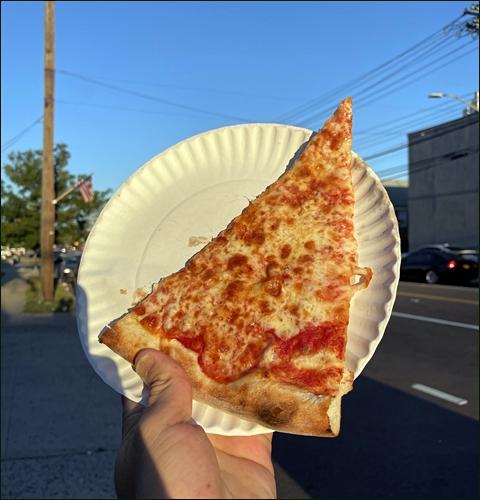
The New York Style pizza is another style of pizza making and is known as the most recognisable to the Neapolitan tradition, New York style adapted for the fast-paced lifestyle of America’s East Coast, where the city and state of New York are located. The style features a large, wide slice with a thin but sturdy crust that allows it to be folded in half, suited for on-the-go consumption. The style has a signature “chew” The secret to it is the use of high-gluten bread flour and, according to local legend, the specific mineral content of New York’s water. Unlike the delicate Neapolitan pie, the New York slice uses a low-moisture mozzarella and a heavily seasoned tomato sauce, unlike the Neapolitan way, baked at a lower temperature, typically between 500°F to 600°F (260°c to 315°c) for a longer duration to achieve a crisp, golden-brown bottom.
We recommend checking out the video below from Brian Lagerstrom
if you want to dive deeper into New-York Style pizza
Chicago deep-dish style
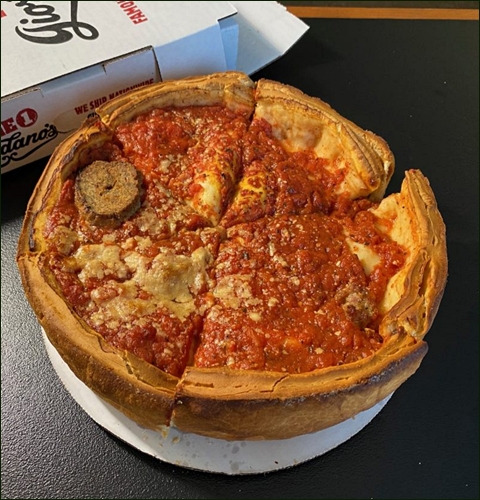
Far from the thin-crust tradition of Pizza, the Chicago deep-dish style is a masterpiece of vertical architecture in Pizza making. Here, the Pizza is baked in a deep, circular pan; at 425°F (220°C). this style is more of a savoury pie than a flatbread. The assembly is inverted, and a thick layer of sliced mozzarella sits directly on a buttery, biscuit-like crust, followed by various meats and vegetables, and finally topped with a chunky, robust tomato “crush”. This helps to prevent the cheese from burning during the extended baking time required for such a dense dish. The result is a rich, indulgent experience that requires a knife and fork, standing in stark contrast to its hand-held counterparts.
Want to know more about Chicago deep-dish and fancy baking one?
We recommend checking out the video below from Brian Lagerstrom
Sicilian Style
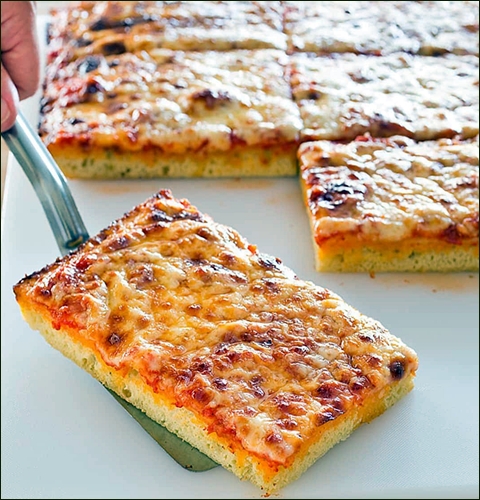
The Sicilian Style Of Pizza making, or Sfincione, offers a thick-crust pizza, This style originates from the Italian island of Sicily. pizza is traditionally baked in a rectangular tray and is characterised by a spongy, focaccia-like dough that can be up to an inch thick. While the Americanized version of Sicilian style often features a heavy layer of mozzarella cheese, the authentic Sicilian version is bread-forward, often topped with a strong-flavoured sauce made of tomatoes, onions, anchovies, and hard sheep’s milk cheese known for its high-fat, rich and nutty profile. The bottom of the crust is essentially “fried” in the olive oil-lined pan, creating a crunchy, golden exterior that yields to a soft, airy interior. pizza is usually baked at a temperature of 500º for 12 to 18 minutes.
To learn more about baking a Sicilian style pizza,
we suggestwatching the Pasta Grammar video below.