
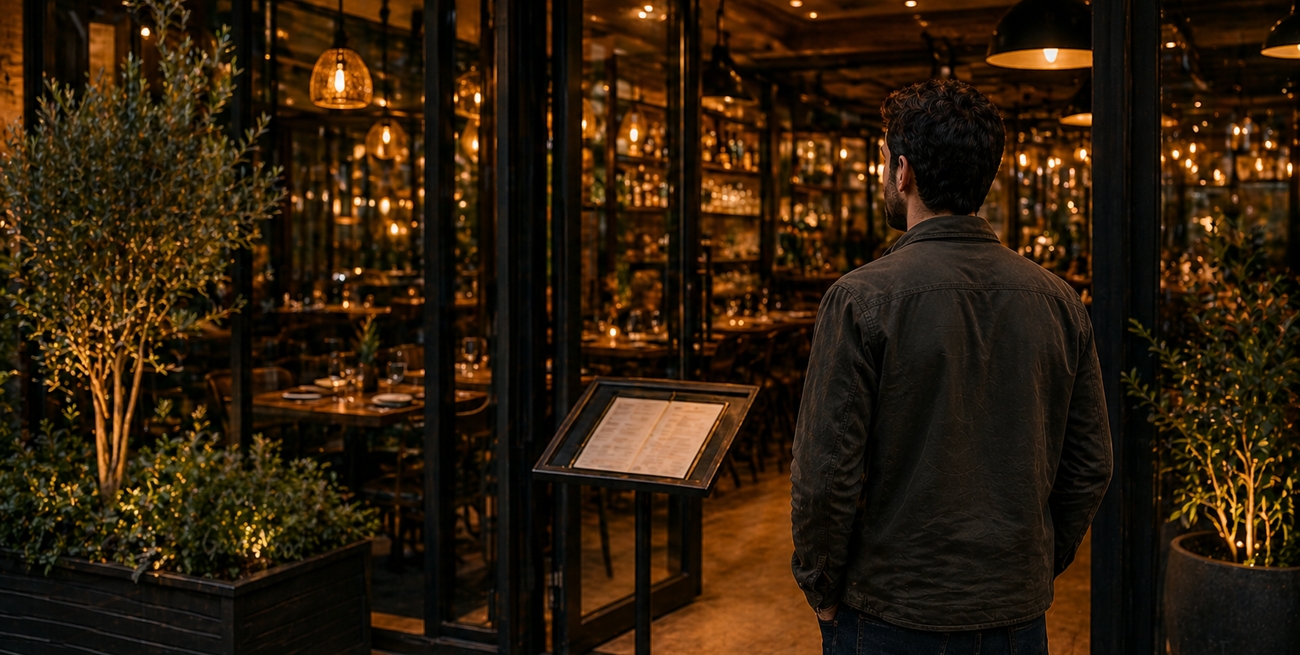
Folks, this is known to all of us, most of the time, before you ever walk into a restaurant, you have decided not what to order but whether the restaurant is worth trying at all. You have been there, right? In today’s world, people rarely walk into a place blindly. Not sure consciously, but they do read and assess everything happening around and judge, much before grabbing a chair. Here, trust is not earned over a period of time but in a matter of seconds. Interestingly, here, unlike our last blog, “Why Some of Us Never Go Back to a Restaurant After a Bad Experience”, the decision is shaped by perception, not experience.
The first impression begins even before entering a restaurant. Simply put, Customers evaluate everything they see from outside the restaurant. Starting from the cleanliness, lighting, the overall ambience, presentation, and even the type of crowd sitting. A well-maintained exterior suggests outstanding hospitality and service, but a dirty exterior raises immediate doubts. These observations may seem small, but they are capable of answering an important question: Does this place feel reliable?.
Social proof has become so important today. Customers often turn to these signals for reassurance. Before making a decision they look at:
- Online ratings
- Customer reviews
- Photos shared by other diners
- Social media mentions.
If a customer finds a high rating, it reduces perceived risk, but more importantly, patterns in reviews help them to shape perception. Positive reviews and repeated praise create confidence in their minds, but repeated complaints can only create confusion and hesitation. Customers are not necessarily looking for the perfect restaurant. But consistency and performance have become highly important.
In addition to that, crowd psychology also plays a significant role in building trust. To give an example, a busy restaurant naturally attracts more people because it signals demand and popularity. Because when they see a restaurant that is often busy, they assume it’s good; But an empty restaurant raises questions, regardless of its actual quality.
We don’t believe this assessment may always be correct, but it is very important in terms of making a decision.
The Menu’s role
The menu itself acts as a subtle but powerful trust signal. Customers do evaluate what is offered, not just that they are even concerned about how it is plated and presented to them. Because they pay attention to things like:
- Clarity of descriptions
- Pricing structure
- Balance between variety and specialization
- Overall layout and readability
It goes without saying that a well-created menu brings confidence, but an inconsistent one can only create doubt. Also, about pricing, human psychology often sees cheap products as low-quality, while overpriced items without justification create hesitation.
Keeping It Clean
Customers are worried about how clean it is, because cleanliness, along with hygiene, is non-negotiable when it comes to building trust for customers, irrespective of “age and gender”. They immediately notice:
- Table condition
- Cutlery cleanliness
- Washroom standards
- Staff appearance
These details form the foundation of trust. Unlike food quality, which is experienced later, cleanliness is visible from the start. Once a customer is not sure about hygiene, they stay away. Not just that, the first interaction with staff can significantly influence how a restaurant is perceived. A simple greeting, eye contact, or willingness to assist, even the body language, all matter. Good service builds trust even before the food arrives, while poor interaction can create doubt that carries through and can even damage the entire experience.
In this digital-first environment, a restaurant’s online presence is crucial in shaping its trust. Especially for a premium restaurant, customers often engage with its photos, social media pages and the overall branding before visiting. A consistent and professional online presence creates familiarity and reduces uncertainty. In contrast, outdated information or poor-quality visuals can create doubt even before the first visit happens.
Convenience is another factor that can silently influence a restaurant’s trust. Customers consider how easily a restaurant fits into their routine. They think about:
- Location and accessibility
- Parking availability
- Waiting time
- Reservation systems
Even a highly rated restaurant can lose out if it feels inconvenient to a customer, and a more accessible option will be preferred. It goes without saying that for restaurants, trust is also built through consistency in perception. For example, A restaurant that is usually busy, affordable and well reviewed will create a sense of reliability over time. Even without visiting, customers begin to trust the place. and becomes their preferred choice.
Make no mistake. Choosing the right one and avoiding the wrong one is equally important if you are in the process of finding a restaurant. A bad experience will end in loss of money, time and expectation, and people will want to stay away from it. It is less about excitement and more about assurance because everybody wants to be confident that they made the right decision.
This trust also has an emotional dimension to it. We will tell you why…Beyond logic and evaluation, customers are drawn to places where they feel comfortable. Factors like lighting, ambience, noise levels, and overall atmosphere add to it. A restaurant that gained this trust instantly becomes their preferred choice over a far more technically superior one.
Expectations further shape how trust is formed. A restaurant that presents itself as premium is expected to ensure a top level of quality and standards over a casual dining restaurant. It’s simple, trust is built when reality matches expectation in the same way it gets broken when there is a gap. A simple restaurant that delivers exactly what it promises is way more trusted than a premium one that fails to meet expectations.
The fact is that by the time food arrives at the table, most customers have already formed an opinion because they observed, evaluated and concluded if the place feels right. The food is not that influential here because it can reinforce that trust or weaken it. It can never build it. This highlights an important reality that restaurants don’t just serve meals, This highlights an important reality—restaurants don’t just serve meals, they create signals that influence decisions long before the first bite.
Final Bite
Trust in a restaurant doesn’t begin with taste; it begins with perception. From the moment a customer sees a place, checks its reviews, or interacts with its staff, they have a judgment about the place. And they are in a world filled with choices. People rely on signals that make them feel confident in their decision. And often, that confidence is built before they even sit down. It is worth knowing that dining is not just about what is on the plate, it’s about how certain you feel before it arrives.